Can Blepharoplasty Fix Asymmetrical Eyes?

Can Blepharoplasty Fix Asymmetrical Eyes?

Yes – in many cases, blepharoplasty can improve asymmetrical eyes, especially when the imbalance comes from uneven eyelid skin, unequal fat pockets, or one lid sitting lower than the other. Eyelid surgery is one of the few procedures planned side by side, millimeter by millimeter, so the goal isn’t just “less skin” – it’s balance. Not every asymmetry starts in the eyelid, though. The honest answer depends entirely on what’s causing the difference.
Below, we break down what eyelid asymmetry is, what causes it, what surgery can and cannot correct, and what to expect afterward.
Understanding Eyelid Asymmetry
Eyelid asymmetry simply means the two eyelids don’t match. That mismatch can show up in several ways:
One upper lid crease sits higher or lower than the other, so one eye looks bigger or more “open.”
One lid has more hooded skin, which can hide the crease entirely on one side while the other still shows.
One eyelid droops lower than the other, or one eye appears more closed.
One eye looks more tired, even after a full night of sleep.
Under-eye bags or puffiness differ in size, with one side fuller than the other.
One eyebrow sits higher, pulling the lid up with it.
What Is Blepharoplasty?
Blepharoplasty is the medical term for eyelid surgery. It removes or repositions excess skin, muscle, and fat that change the shape and openness of the eye area. The goal is a rested, alert appearance – not a “done” look.
At ellevateMD, blepharoplasty is performed by Dr. Ann Jayaram, whose entire practice is built around the eye area. That focus matters when asymmetry is the concern, because correcting a difference of two or three millimeters requires measuring, marking, and planning each side independently rather than treating both lids identically.
Can Blepharoplasty Fix Asymmetrical Eyes?
Blepharoplasty works well for asymmetry because it is inherently a customized procedure. Each side is measured and planned on its own. A tailored surgical plan might involve:
Removing different amounts of skin. If one upper lid carries more hooding, more skin is removed from that side so both creases end up at a similar height.
Adjusting the eyelid crease. The incision is placed strategically to redefine the crease, making both sides more similar in height and shape.
Sculpting or repositioning fat. If one lower lid has a fuller fat pocket, that side is addressed more than the other.
Combining ptosis repair. If the underlying issue is a weak muscle rather than skin, ptosis repair raises the lid margin – not just the skin above it – to match.
So when patients ask, “Can blepharoplasty fix asymmetrical eyes?” – the more useful question is, “Which layer is causing my asymmetry, and can surgery reach it?”
Limitations and Considerations
A few honest points:
Perfect symmetry is not the goal, and it isn’t achievable. The realistic aim is to reduce a noticeable difference to an unnoticeable one.
Bone and orbital differences can’t be changed by eyelid surgery. If one eye sits deeper in the socket, the lid can be balanced, but the socket shape remains.
Brow-driven asymmetry may not fully resolve with eyelid surgery alone.
Some asymmetry is neurological or muscular in origin and requires a different approach entirely.
Alternative Treatments for Eye Asymmetry
Not everyone needs surgery. Depending on the cause, options at ellevateMD include:
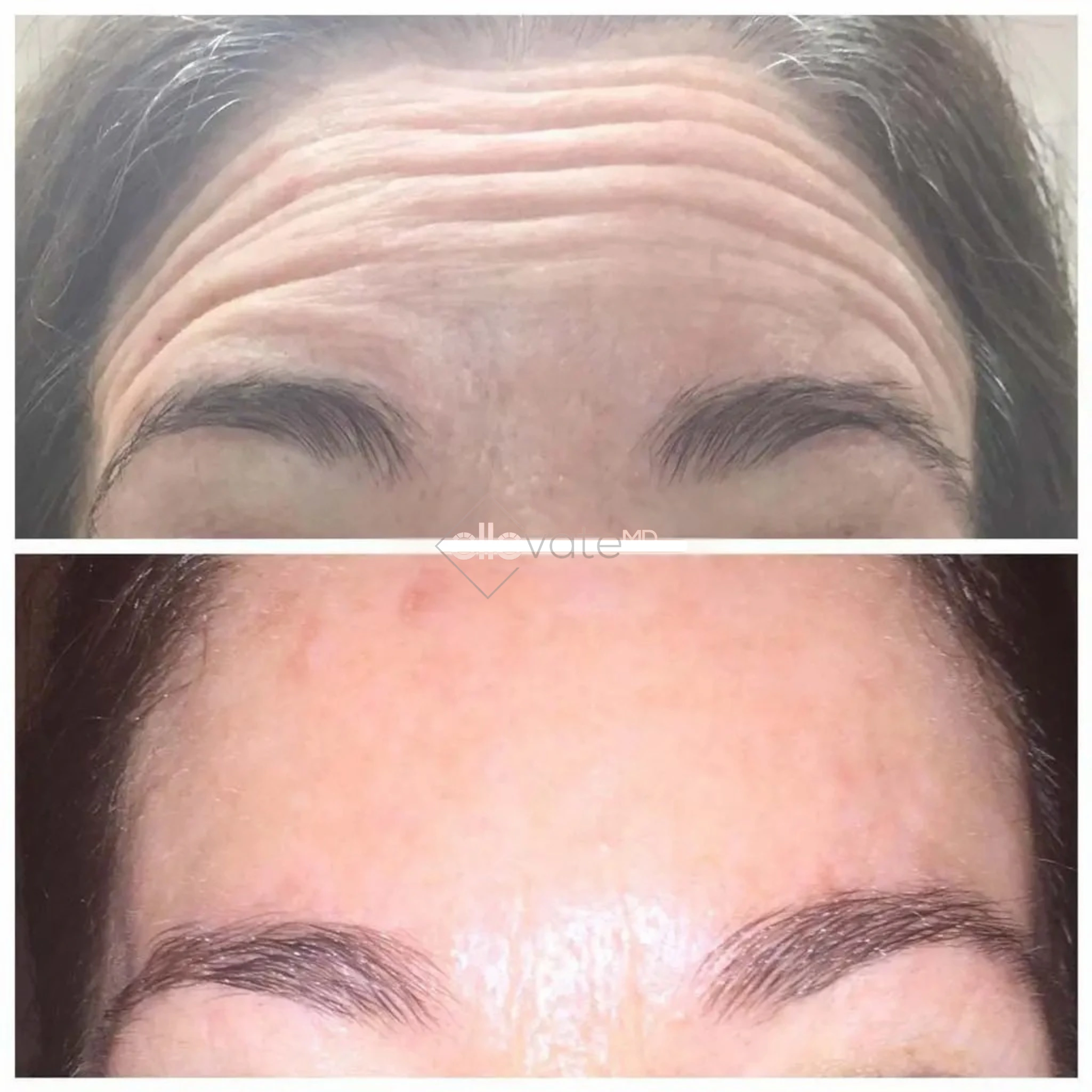
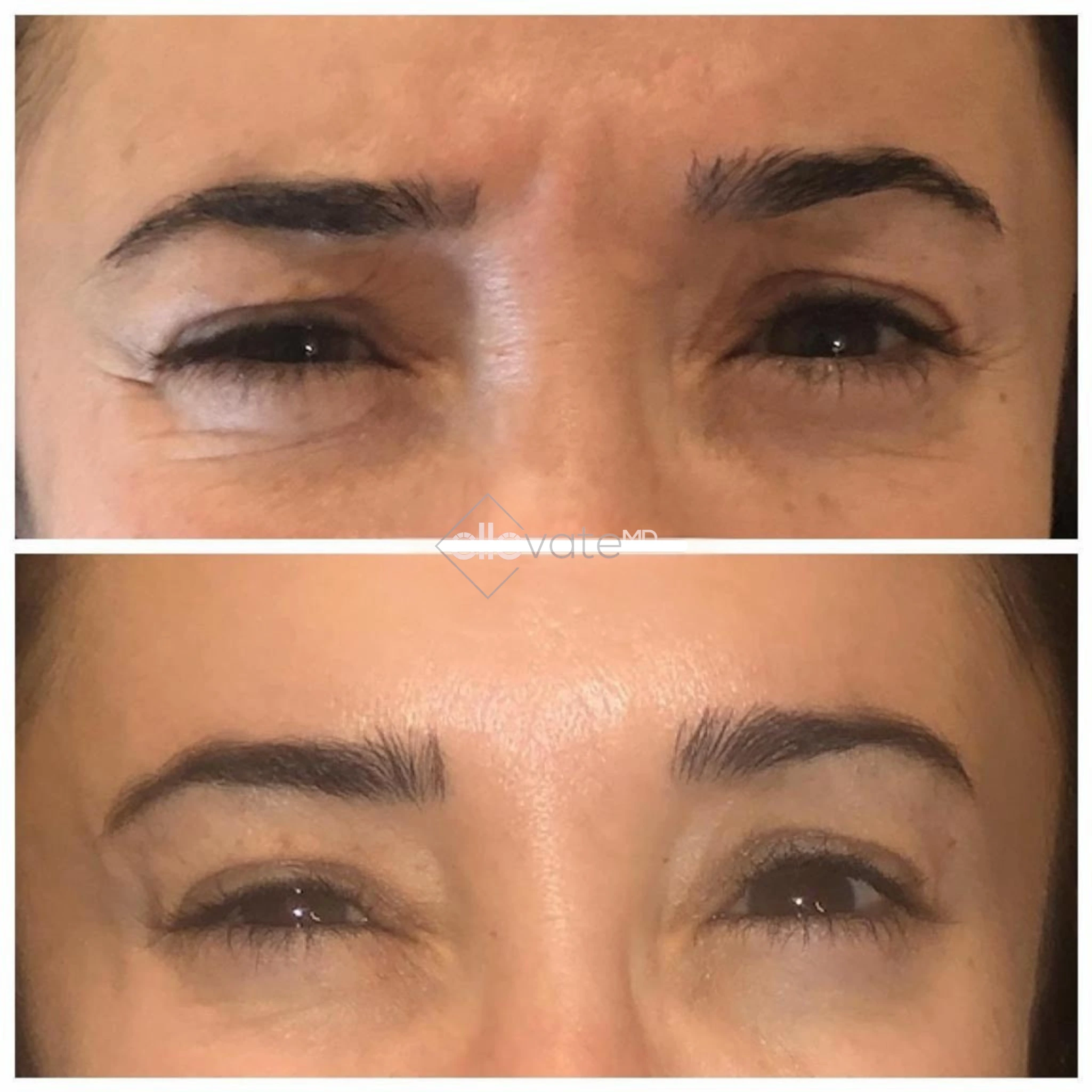
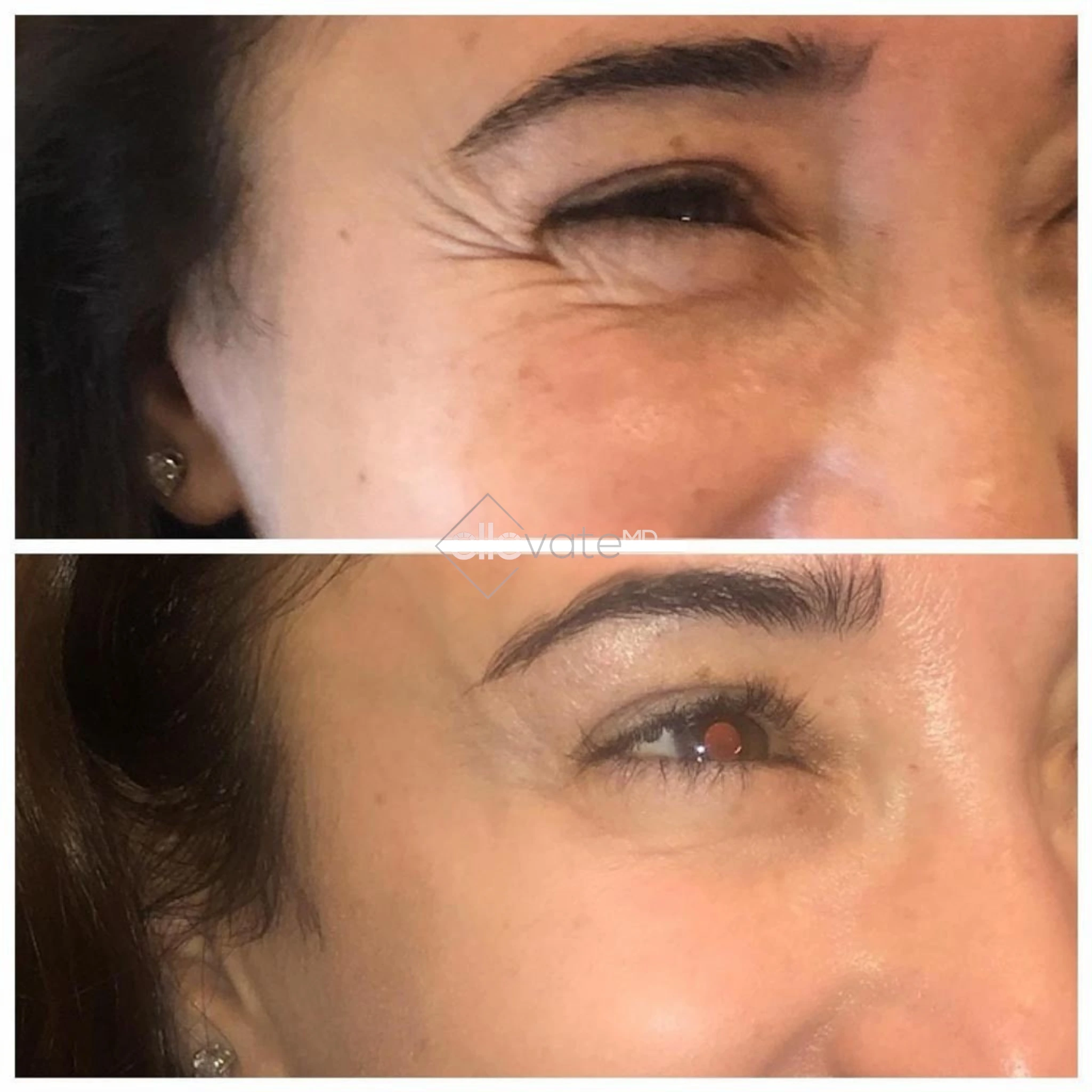
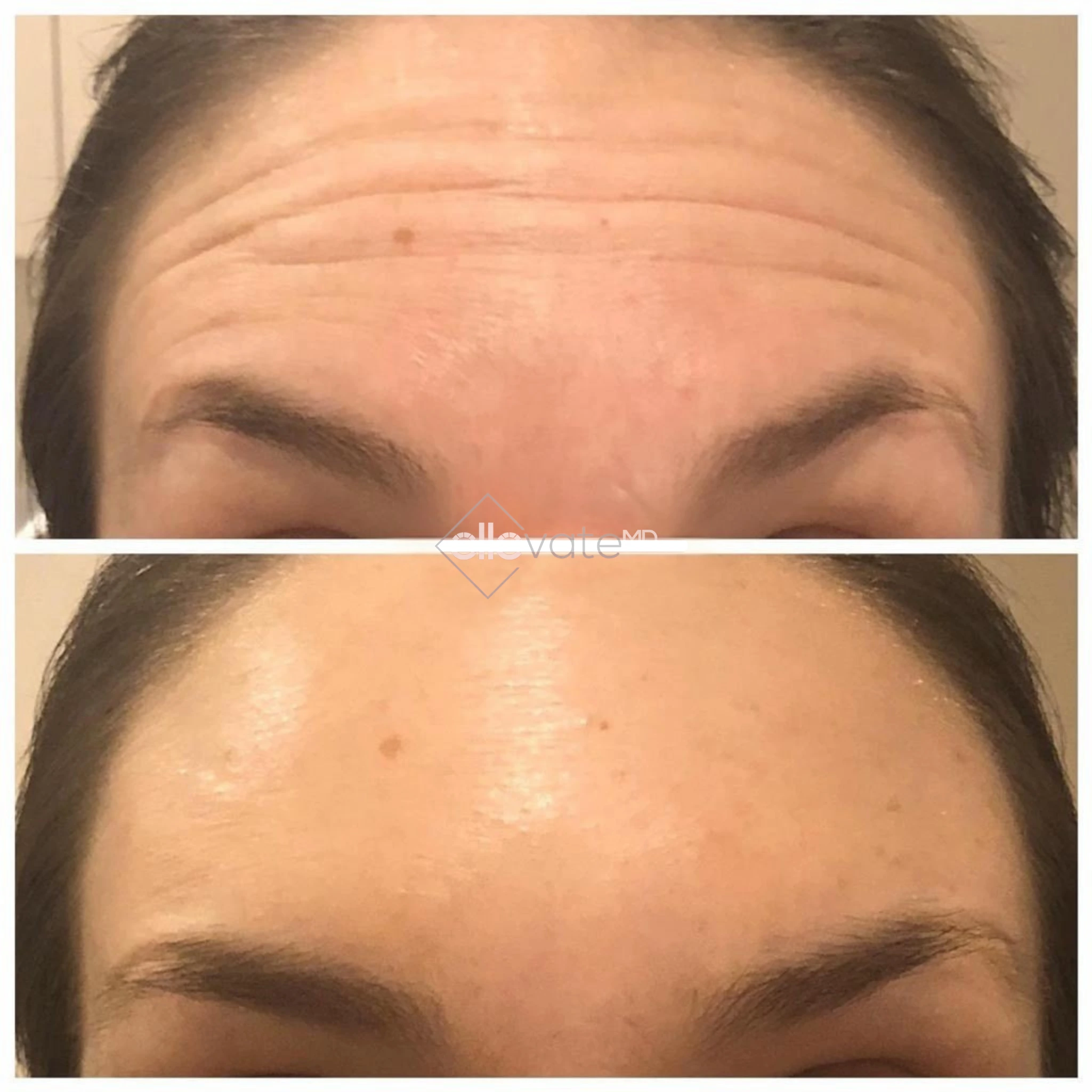
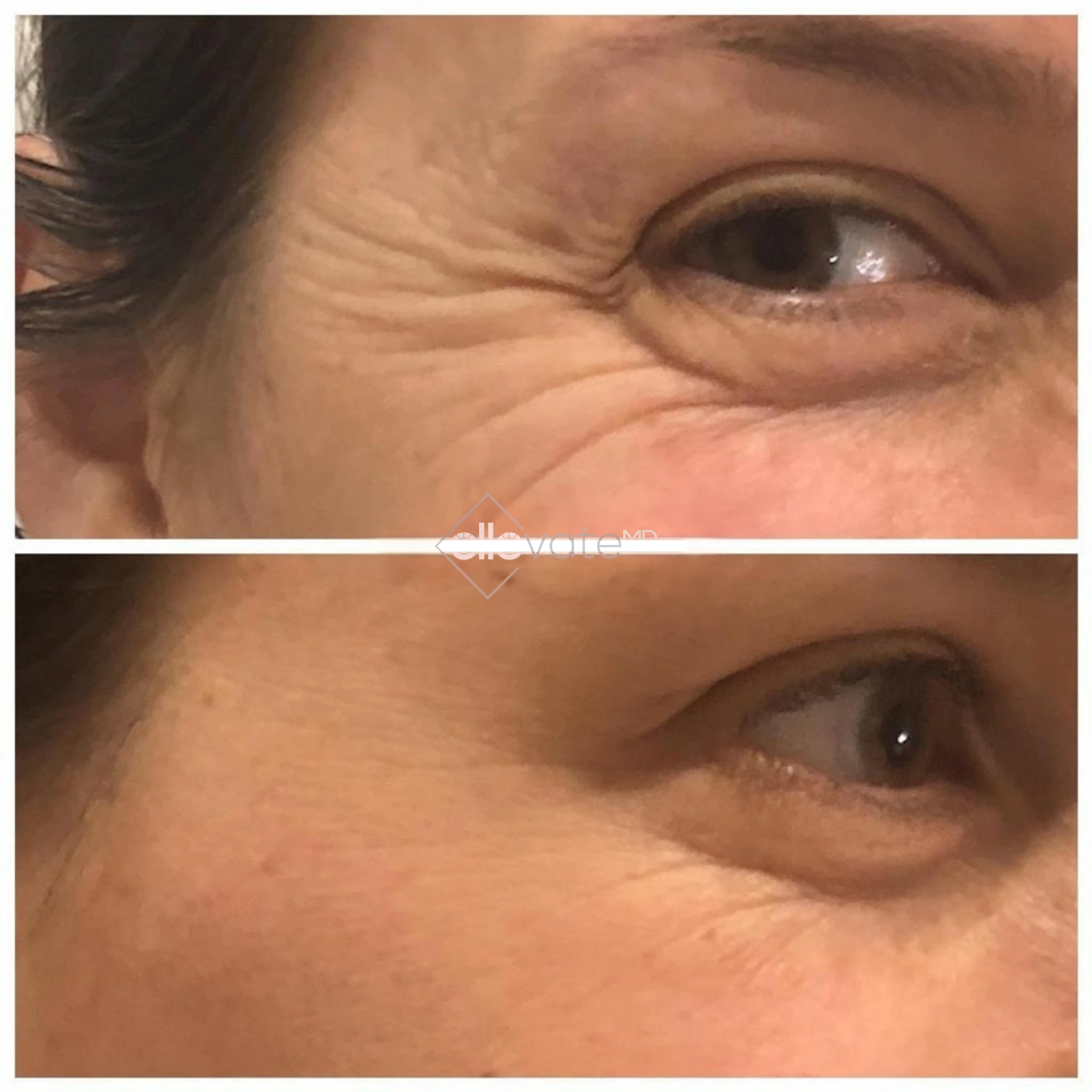
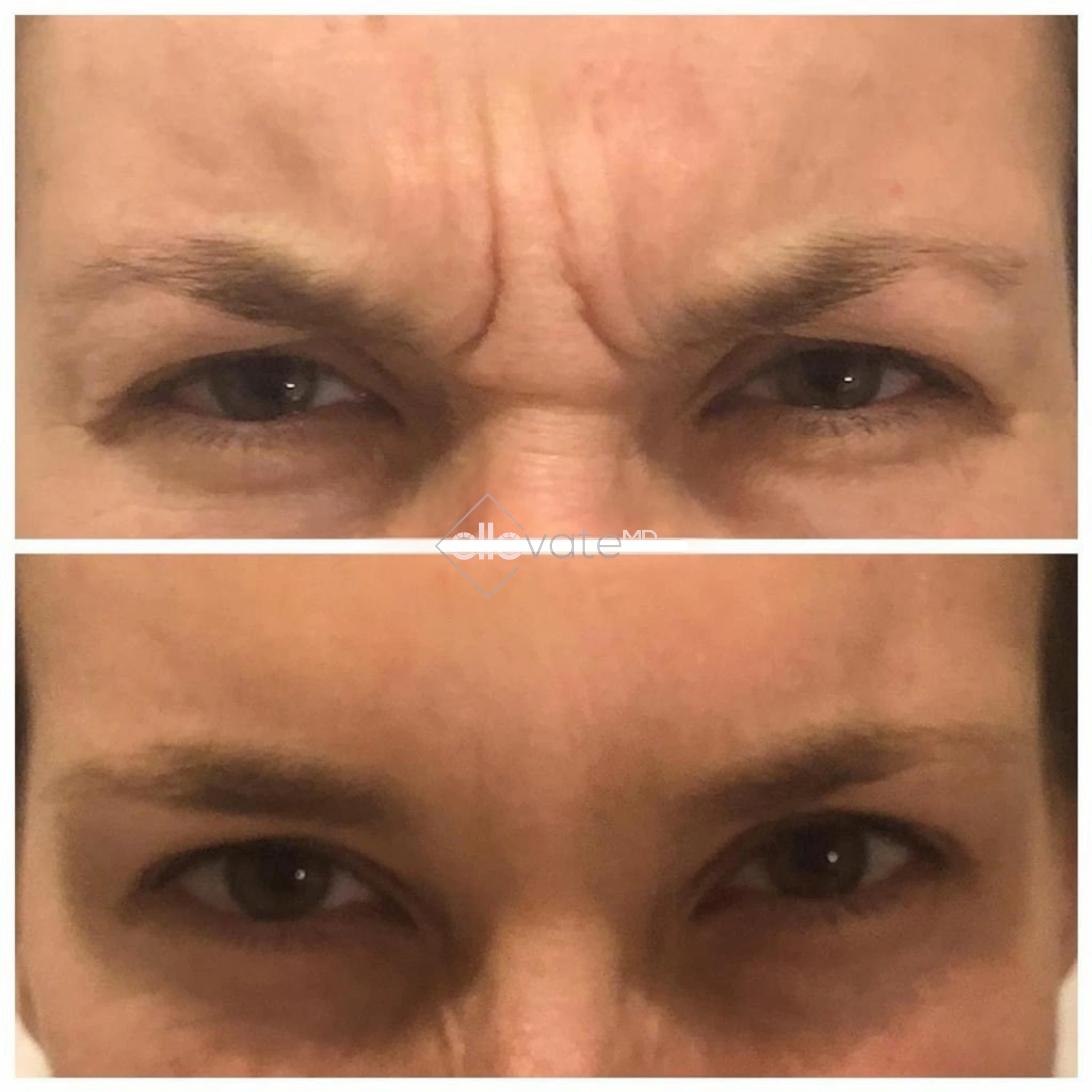
Botox – Precisely placed units relax certain muscles to lift one brow slightly more than the other, making the eyes appear more open and even. A complimentary touch-up is included at 7–10 days.
Fillers – Useful when one under-eye area is more hollow than the other, creating a shadow that reads as asymmetry.
Sofwave – An FDA-cleared, non-invasive treatment that stimulates collagen and can provide a subtle brow lift.
Fraxel laser – Helpful when uneven pigmentation or sun damage under one eye exaggerates the appearance of imbalance.
Brow lamination – Grooming that visually evens out brow shape.
Other Surgical Procedures
Ptosis repair – For a lid margin that sits too low. Often the true fix when one eye looks “smaller,” and frequently performed alongside a blepharoplasty to address both muscle function and excess skin.
Canthopexy – Supports and repositions the outer corner of the lower lid, correcting an uneven eye shape or downturned corner on one side.
Lower lid fat transfer – Considered after evaluation when volume loss is the driver.
Am I a Good Candidate for Blepharoplasty?
You may be a strong candidate if:
The difference between your eyes bothers you in photos or in the mirror.
Excess upper lid skin is heavy enough that it affects peripheral vision or makes eye makeup difficult.
You are in good general health and can pause blood thinners such as ibuprofen, aspirin, and Aleve for two weeks before surgery.
You want a natural result rather than a dramatic change.
Your expectations are focused on improvement and balance, not perfection.
Our team treats both men and women, and Dr. Ann Jayaram performs both cosmetic and functional eyelid work. During your evaluation, she assesses eyelid anatomy, skin quality, and muscle function, then explains which procedures suit your goals.
Managing Asymmetry After Surgery
Temporary unevenness during healing is normal and expected. Swelling and bruising almost never resolve at the same rate on both sides – one eye typically settles a few days ahead of the other. This is not the final result.
Recovery and Results
Recovery for the Ellevate Lid Lift is roughly one week, with minimal downtime.
Most patients return to their normal routine after the week-one visit; makeup is generally fine at that point.
Allow a full month of healing before weddings, photos, or major events.
Results continue to refine over several months as tissues settle, and typically hold for 10 to 15 years or more.
Conclusion
So, can blepharoplasty fix asymmetrical eyes? Often, yes – particularly when the imbalance comes from uneven skin, unequal fat pockets, or a drooping lid on one side. Because the procedure is planned side by side, a skilled surgeon can customize each eye to restore balance and harmony.
But asymmetry can also originate in the brow, the eye socket, or the muscle, and those cases may call for ptosis repair, canthopexy, or non-surgical options like Botox, fillers, or Sofwave. The only way to know which applies to you is a measured, in-person evaluation with Dr. Ann Jayaram at ellevateMD.