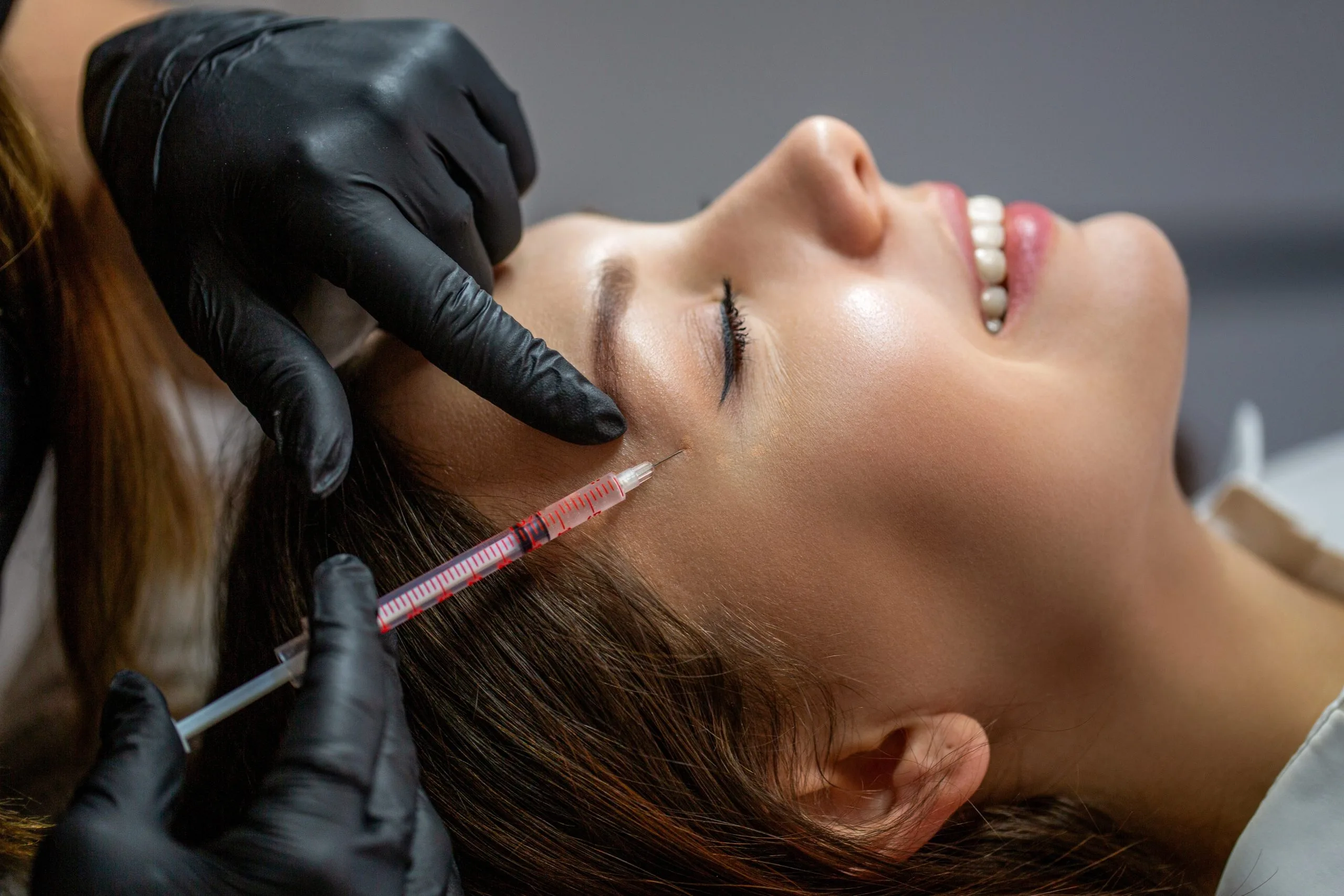
Most patients need about 10 to 30 units of Botox per treatment area, and a full upper face treatment covering the forehead, frown lines, and crow’s feet often totals 40 to 64 units. The answer depends on your muscle strength, the area being treated, and your cosmetic goals.
These ranges are a starting point. The right answer comes from how your face moves. This guide explains what units are, what changes your dose, and typical numbers for each area. It also shows how Dr. Ann Jayaram, an oculoplastic surgeon, builds a plan around your face rather than a chart.
A unit is a standard measure of Botox strength. It describes how much active product reaches the muscle. It does not describe how much liquid is in the syringe.
Botox relaxes the muscles that create expression lines. When a muscle contracts less, the skin above it folds less. Lines soften, and new creases are less likely to form. The number of units controls how much a muscle relaxes. Fewer units allow more movement. More units allow less.
Botox arrives as a dry powder in a sealed vial. Before treatment, it is mixed with sterile saline. The number of units in the vial stays the same no matter how much saline is added.
Your provider then draws up a measured dose for each injection point. For example, a frown line treatment may use five injection points with 4 units at each spot. The total for that area would be 20 units.
Units and volume are easy to confuse. Volume is the amount of liquid. Units are the amount of active product within that liquid.
Two syringes can hold the same volume and contain different numbers of units, depending on how the product was mixed. This is why units are the only reliable way to compare doses. When you talk about your treatment history, share the number of units you received.
Younger patients often have fine lines that only appear with movement. These lines may respond to a lower dose. Patients with longer treatment histories or deeper lines may need more units to reach the same softening.

Skin thickness also plays a role. Thicker skin over strong muscles can need a higher dose. Thinner skin may show results with less product. Some lines remain visible even when the face is at rest. Botox alone may not fully erase those lines, and other treatments may help.
Muscle strength is one of the biggest factors in your dose. People who frown, squint, or raise their brows often tend to have stronger muscles in those areas. Men often have larger facial muscles than women and may need more units.
Your metabolism and activity level can also affect how long results last. Some patients find that results fade sooner than expected. This can be a sign that a muscle needs a slightly higher dose next time.
Each part of the face has different muscles. The frown muscles between the brows are thick and strong. The muscles around the lips are small and delicate. Large muscles need more units, and small muscles need very few.
Placement matters as much as the number. The same dose placed a few millimeters higher or lower can change how your brows sit. This is especially true around the eyes, where small changes are easy to see.
Some patients want a smooth, still forehead. Others want to soften lines while keeping natural expression. Your goal changes your dose.
A softer, more natural result usually means fewer units. A stronger effect with less movement usually means more. Dr. Ann Jayaram’s priority is a natural result that still looks like you, so many plans start at a moderate dose.
The ranges below reflect common starting points in aesthetic medicine. Your plan may fall above or below them.
Horizontal forehead lines form when the frontalis muscle lifts the brows. This muscle is the only one that raises the brows. Treating it takes care, because relaxing it too much can lower the brows.
Most patients receive 10 to 20 units across the forehead. Patients with a short forehead or a low brow position may need fewer units. The forehead is often treated along with the frown lines. This keeps the muscles that pull the brows down from overpowering the muscle that lifts them.
The vertical lines between the brows are often called the 11s. Several muscles work together here to pull the brows down and in. These muscles are thick and strong.
Most patients need about 20 units for frown lines. Patients with very strong frown muscles may need 25 to 40 units. Because these muscles pull the brows downward, treating them well can create a subtle lift at the inner brow.
Crow’s feet are the lines that fan out from the outer corners of the eyes. They form when you smile or squint. The muscle that creates them circles the eye.
A typical dose is 8 to 12 units per side, or about 16 to 24 units total. Placement near the eye calls for precision. As an oculoplastic surgeon, Dr. Ann Jayaram focuses on eyelid anatomy and uses that knowledge when treating this area.
Some crow’s feet remain visible at rest because of sun damage and changes in skin texture. In those cases, Fraxel Laser can address the skin while Botox addresses the muscle.
Bunny lines are the small diagonal lines on the sides of the nose. They appear when you scrunch your nose or laugh. Most patients need 4 to 10 units total. Some patients develop bunny lines after other areas are treated, as the face finds new ways to move.
The masseter muscles sit at the angle of the jaw and help you chew. Botox in this area is used to slim a wide lower face or ease jaw clenching. These muscles are large, so doses are higher. A common range is 20 to 50 units per side, and results build over several weeks.
Smaller areas usually need small doses. Common ranges include:
Lip flip: 4 to 6 units to relax the upper lip so it turns slightly outward
Chin dimpling: 4 to 10 units to smooth an “orange peel” texture
Corners of the mouth: 2 to 4 units per side to ease a downturned look
Neck bands: 25 to 50 units, depending on how many bands are visible
Lines caused by volume loss, such as deep folds around the mouth, often respond better to Fillers than to Botox.
Online charts list average doses. They cannot account for your muscle strength, brow position, or facial shape. Two people with the same lines can need very different doses.
Charts also ignore how areas affect each other. Treating only the forehead without the frown muscles can drop the brows. Treating the frown muscles alone can change the brow arch. A plan works when it looks at the whole upper face together.
“Baby Botox” means using lower doses spread across an area. The goal is to soften lines while keeping most of your natural movement. It is a common choice for first-time patients and for those who want a subtle change.
A baby Botox forehead treatment might use 4 to 10 units. Results may not last as long as a standard dose, since less product is working on the muscle. For many patients, the softer look is worth more frequent visits.
Yes. Botox takes about 7 to 14 days to reach its full effect. Adding more before then can lead to an overdone result.
Our Botox treatments include a touch-up visit at 7 to 10 days. At this visit, Dr. Ann Jayaram checks your results and adds a few units if an area needs more balance. Starting lower and adding later is often the safer path to a natural look.
Twenty units is often enough for one area. It is the typical dose for frown lines and a full dose for many foreheads. It may also cover crow’s feet for patients with mild lines.
Twenty units is usually not enough to treat the forehead, frown lines, and crow’s feet all at once. Spreading a small dose across many areas can leave each one undertreated. If you want to treat several areas, a plan will usually call for more units.
Yes, too much Botox in the forehead can make it feel heavy. The frontalis muscle holds the brows up. If it relaxes too much, the brows can sit lower and the upper lids can look hooded.
This matters for patients with extra eyelid skin. Many people raise their brows without noticing to keep heavy lids out of their vision. Relaxing the forehead can reveal that heaviness. Dr. Ann Jayaram looks at the eyelids before treating the forehead. For some patients, the real concern is eyelid skin, and an Upper Blepharoplasty may address the problem more directly than Botox.
Botox comes in vials rather than prefilled syringes. Cosmetic vials commonly hold 50 or 100 units. Each patient receives a measured portion of a vial, drawn into syringes for each area. This is another reason units, not syringes, are the clear way to talk about dose.
Your dose can change from one visit to the next. Some patients find they need fewer units after regular treatments, since relaxed muscles may become less active. Others need more as their goals change or as lines deepen with age.
Tracking how long your results last helps guide each new plan. If results fade early, a slightly higher dose may help. If a result felt too strong, the next dose can be lowered.
Your consultation focuses on how your face moves. Dr. Ann Jayaram will ask you to frown, smile, and raise your brows. She will check your brow position, eyelid skin, and the balance between your facial muscles.
You will talk about which lines bother you most and how much movement you want to keep. You will leave with a clear plan that lists which areas to treat and a suggested unit range for each.
The question “How Many Units of Botox Do I Need?” has no single answer that fits everyone. Two areas of the face can look similar and behave very differently. A personal assessment looks at muscle strength, brow height, eyelid shape, and your goals together.
This is especially important around the eyes. The forehead, brows, and eyelids work as one unit. Changing one can affect the others. A plan built with that in mind helps you avoid a heavy brow or an unbalanced result.
Dr. Ann Jayaram leads ellevateMD in Atherton, CA, serving patients across the Bay Area. She is a Stanford-educated, Northwestern-trained oculoplastic surgeon who specializes in the eyelids and the area around the eyes. She has performed more than 7,000 procedures, including her signature Ellevate Lid Lift.
Her approach centers on precision and comfort. Her goal for each patient is a result that looks natural and uniquely their own. That same focus guides how she doses and places Botox. You can learn more about her background on our About page.
Your first visit is a chance to understand your face before any product is used. Dr. Ann Jayaram reviews your concerns, explains which treatments fit them, and recommends a dose. Some patients benefit from Botox alone. Others pair it with Fillers, Fraxel Laser, or Eyelid surgery. Visit our Botox treatment page to learn more about the treatment.
It helps to decide which lines matter most to you. Think about whether you want a subtle softening or a smoother, stiller look. Note how past treatments looked and how long they lasted. These details help shape a dose that suits you from the first visit.
Most first-time forehead treatments use 10 to 20 units. If you want to keep more natural movement, a “baby Botox” approach may use 4 to 10 units. Starting lower and adding a few units at your 7 to 10 day touch-up visit is often the safer path.
Often, yes. Men tend to have larger, stronger facial muscles, so they may need more units in the same area to get a similar softening. Your dose is set by how your muscles move, not by a chart.
It depends on how many areas you treat. One area usually takes 10 to 30 units. A full upper face treatment of the forehead, frown lines, and crow’s feet often totals 40 to 64 units. Jawline and neck treatments use more, because those muscles are larger.
ellevateMD is in Atherton, CA, a short drive from Palo Alto and Menlo Park. Dr. Ann Jayaram, an oculoplastic surgeon, checks your brows, eyelids, and muscle strength before recommending a unit range for each area. Book a consultation to get your personal plan.
Most patients need 10 to 30 units per area and 40 to 64 units for the full upper face. Your true number depends on muscle strength, treatment area, and your goals. Starting at a moderate dose, checking results at the touch-up visit, and adjusting over time leads to a natural result. A personal assessment with Dr. Ann Jayaram gives you a plan built for your face.